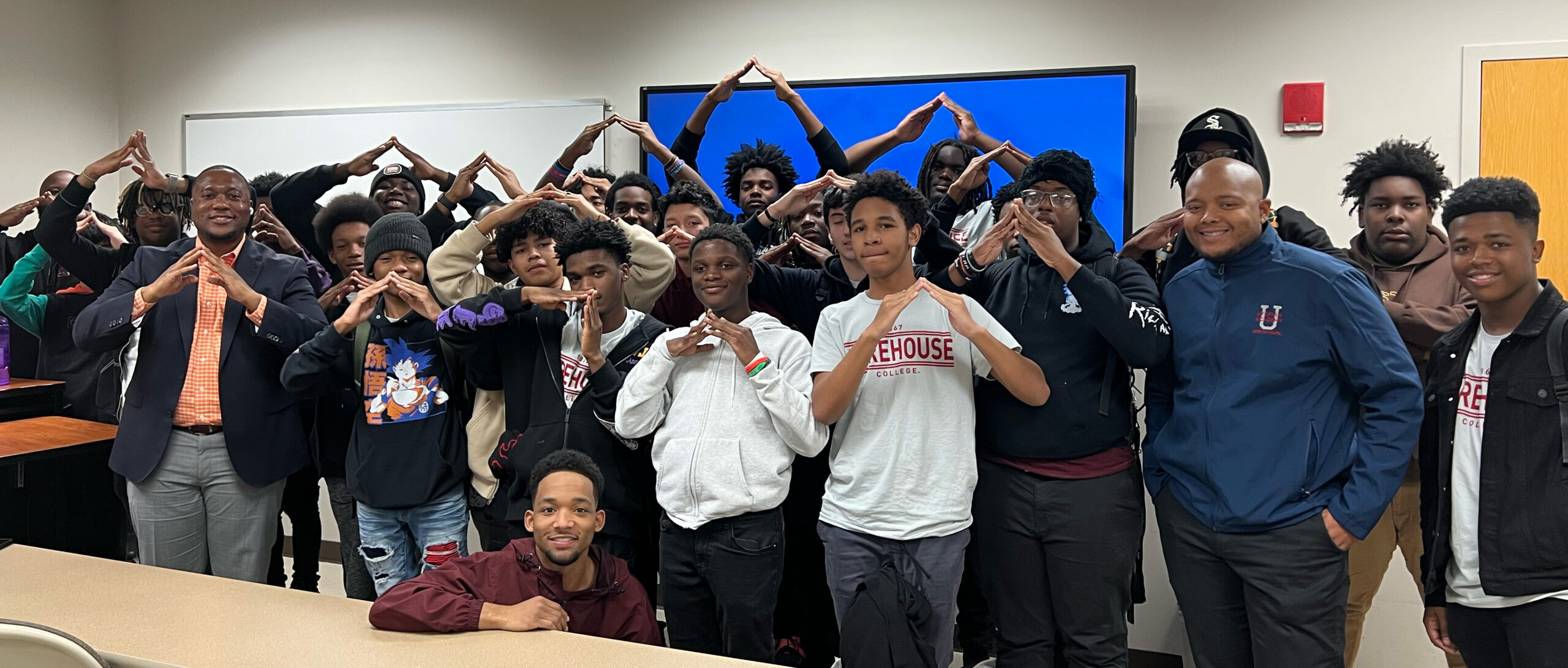
One of the most powerful dimensions of the Belonging Beyond Brown screening experience has been the voices of the audience members themselves. At screenings throughout the tour, participants were invited to share their own stories and reflections through anonymous audio, written, or digital responses. Prompted by one of three questions, attendees opened up about moments of exclusion, gratitude for educators who changed the course of their lives, and their own definitions of what belonging in education truly means. These responses have become a living archive of testimony that extends the film’s mission far beyond the screen.
Describe a time when you felt like you did not belong in an education setting. How did it make you feel?
“NYC integrated the school system and I had to go from Harlem to downtown and take 3 subway trains at 13 years old in the 7th grade at rush hour every day in 1963.”
“When our local school closed in the Bronx we moved to the suburbs and had to integrate the school. I had stomach aches every day.”
“I was entered into the gifted program early on in my elementary school career. This put me on a track where I was often the only Black person in my class. When certain subjects came up, everybody else in the class would look at me specifically as the one Black person and I had to explain it. This is why I decided to come to Morehouse and be around more people that were from a similar cultural background to myself.”
“In my high school, I looked around the classrooms and I saw no one like me, not teachers nor students. Being the only Black male to graduate; it just felt like I did not belong.”
“For high school I was sent to a boarding school where I was only one of the two Black students in a class of 120 students. It was one of the most spirit-breaking experiences I have ever encountered, not just from the students, but also all of the white adults. We were not protected.”
“I went to the University of MD in the late ’80s as a chemical engineering student and graduated with an economics degree instead because of the racism. I was the only Black girl in all my classes for the first two years at College Park.”
Thank a Black educator who made an impact on your life, and tell us how they made this impact.
“My fifth grade language arts teacher, Ms. Fleming, made a great impact on me. She was a very great woman. She introduced me to Maya Angelou and had a great impact on my life.”
“The Black educator that left the most impact on me was my counselor my senior year of Alexander High School, Mr. Warrington. He is a Morehouse alum and he really helped point me in the right direction and ultimately choose Morehouse.”
“I am grateful for every teacher at West Pembroke Primary School in Bermuda, which was majority Black. That foundation prepared me for a mixed high school experience 1977-1982.”
“My eighth grade teacher was Ms. William. She was my music teacher and I loved to sing, but at home singing was not encouraged. When I went to her class, she constantly encouraged me and let me know that I had a beautiful voice.”
“I owe everything that I am, all that I have accomplished, to the Black teachers who supported and encouraged me and all who attended the same schools I did.”
“I want to thank my great-grandmother Lina Tarver. Lina Tarver was a certified teacher in Lee County, Alabama in the late 1860s. An incredible feat! She is the reason that I am who I am today. She’s the reason that I chose education.”
How do you define belonging in education?
“Every child deserves access to a high-quality educational experience where they feel like they belong and matter and they’re respected.”
“As a high school freshman I think belonging is fitting in, being who you are, and being with the people you love. It also means not being judged or excluded from projects due to your race, skin tone, or identity. Regardless of skin tone, all people bleed red and that’s what makes us equal.”
“I define belonging as feeling seen in the education space and others seeing you for how you are and making space for you to grow.”
“Belonging in education is where students can feel like they are actually a part of the community, where families feel welcome, where they feel loved and cared for, and where families feel like they are an important asset to the school community.”
“Belonging in education means having a space that respects my autonomy, my ability to think, and challenges me to have a better understanding of myself and the world around me.”
“For me it means that every individual no matter their capabilities are entitled to receive a quality education. I also believe that belonging in education means that we have to meet students where they are.”