A comparative overview of MCEE’s two academic pathways — P-12 Pathways and Education Studies Pathways — and the shared ecosystem of support that powers both.
P-12 Pathways
For students pursuing teacher certification and classroom teaching careers. Year 1: First Year Experiences. Year 2: Academic Courses. Year 3: Teacher Preparation Courses, focused on students’ academic concentration (e.g. English, Math) and student-centered pedagogy. Year 4: Student Teaching via experiential, on-site training at schools and universities.
Education Studies Pathways
For students pursuing non-traditional education careers that use teaching and learning skills. Year 1: First Year Experiences. Year 2: Academic Courses. Year 3: Education Studies Preparation Courses, focused on leadership and educator development with pathway-specific electives. Year 4: Practicum and Internships, offering site-based learning for education-related career exposure.
MCEE Support (Shared Ecosystem)
Both pathways include Post-Grad Career Support for K-12 Educators and are strengthened by an ecosystem of partnership, innovation, and leadership, including mentorship and support, professional development, leadership development, and workforce readiness.
More Into Our Model
01 — P-12 Education Focus
A state-approved path from classroom study to classroom practice. Those who aspire to enter the classroom as certified teachers upon graduation spend their final three semesters following a state-approved program that includes completing subject-specific teaching methods courses, preparing for the state teacher certification exam, and completing student-teaching requirements at secondary classroom sites.
02 — Education Studies
Preparing leaders for the education sector beyond the classroom. While the Education Studies academic program provides a strong pedagogical foundation, it does not lead to a teaching certificate upon graduation. Features that distinguish it from the traditional teacher preparation program include experiential, field-based opportunities that prepare students for roles in the education sector.
03 — MCEE Post-Bac
Sustaining Morehouse graduates through every stage of a teaching career. Graduates who have completed the traditional or non-traditional educator preparation program need substantial support during their first few years in the classroom. Additionally, several graduates who serve as classroom teachers but did not major in education, or who have changed careers, also need additional support. MCEE’s professional development, networking, leadership training, and mentorship opportunities help increase success for these graduates.
But whether as an elementary school, or as a college, Morehouse addressed itself through its educational program to one overall objective: the making of men. Its unique achievement is that it took in Black boys and prepared them for graduate school, professional school, and for life — and all this in a segregated society.
Dr. Edward Jones, Author, “A Candle in the Dark”
Our Frameworks: The C.A.N.D.L.E. Framework
The Morehouse Center for Excellence in Education remains committed to developing educators with a culturally-relevant perspective who change the world. The C.A.N.D.L.E. framework is the foundation of the Center, guiding all of its initiatives, programming, and academic activities, and ensuring students develop a Renaissance mindset with consequential character, aligned with Morehouse College’s larger mission.
C — Culturally Relevant Pedagogy
Grounds students’ understanding of the relationship between learning and lived experience. Within the MCEE program, students are trained to consider how culture, identity, and history shape both access to education and the meaning people make from it.
A — Appreciative Inquiry
Shapes how students approach challenges and opportunities within education. Students are encouraged to identify strengths — in individuals, communities, and systems — and use those strengths as a starting point for change.
N — Neuroscience
Informs students’ understanding of learning itself. Through this lens, students explore how memory, attention, stress, and environment influence how people absorb and apply information, equipping them to design experiences that align with how people actually learn.
D — Data and Digital Pedagogy
Prepares students to work with information and technology in ways that are both analytical and creative. Students learn to interpret data as a tool for insight, helping them understand trends, measure impact, and make informed decisions.
L — Leadership
Developed as a practice students carry into every space they enter. Within MCEE, students are encouraged to think of leadership as influence, responsibility, and the ability to guide change, whether formal or informal.
E — Experiential Learning
Ensures students apply what they study in real-world contexts. Through internships, community engagement, research, and fieldwork, students connect theory to practice and develop a clearer understanding of how education operates across different environments.
A Photostory: Our Work Across the Center
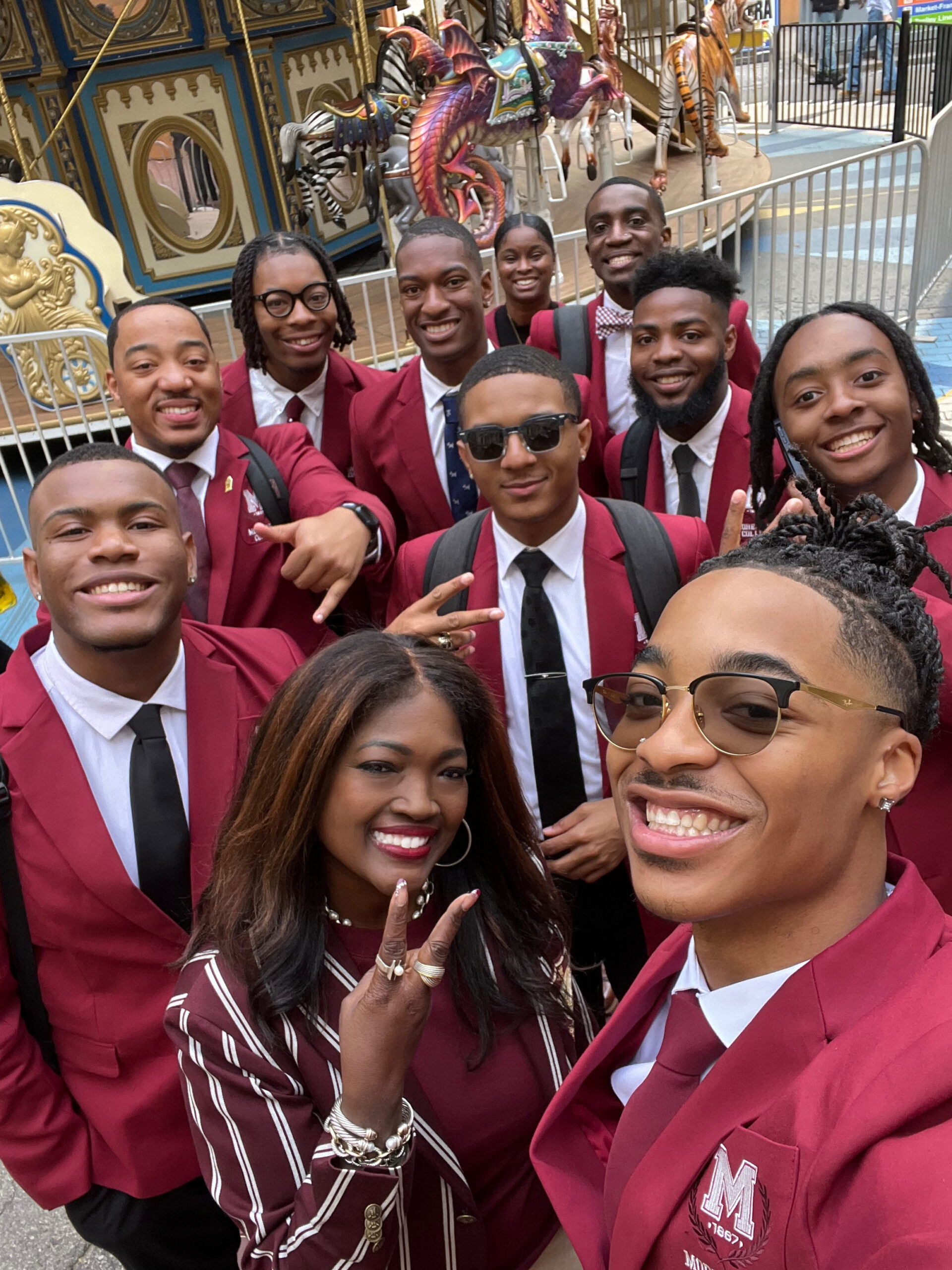
A visual feature spanning MCEE’s programming, including Teaching Fellows, Urban Education Fellows, Guest Lectures, Leadership Fellows, Film Screenings, and Book Talks.
Our Impact
$7+ million raised from community organizations, non-profits, family foundations, corporations, and government programs for the success of MCEE.
- In Spring 2026, 9 Education Studies Majors and 15 Education Studies Minors will graduate — the largest class yet; MCEE started with 3 majors and 1 minor in Spring 2024.
- From 0 to 7 Teacher Certification Opportunities from 2022 to 2026.
- MCEE classes have grown from 33 students in Fall 2022 to 145 students in 12 classes in Spring 2026.
- Over 30 professional development opportunities across thought-leader speaking engagements, mentorship, book clubs, learning, and conferences during the 2025–2026 academic year.
- As of March 2026, MCEE has 40 Education Studies Majors and 27 Education Studies Minors, with expected increases in Fall 2026.
- As of Spring 2026, MCEE has 9 alumni teaching in public or private schools and 5 alumni in graduate programs for education or administrative roles, representing 78% of the program’s graduates.
- 82% of freshmen, sophomores, and juniors who do not have an education major/minor and who take at least one class with the education department end up adding the minor or changing to an education major.